
Parenting vs Protecting
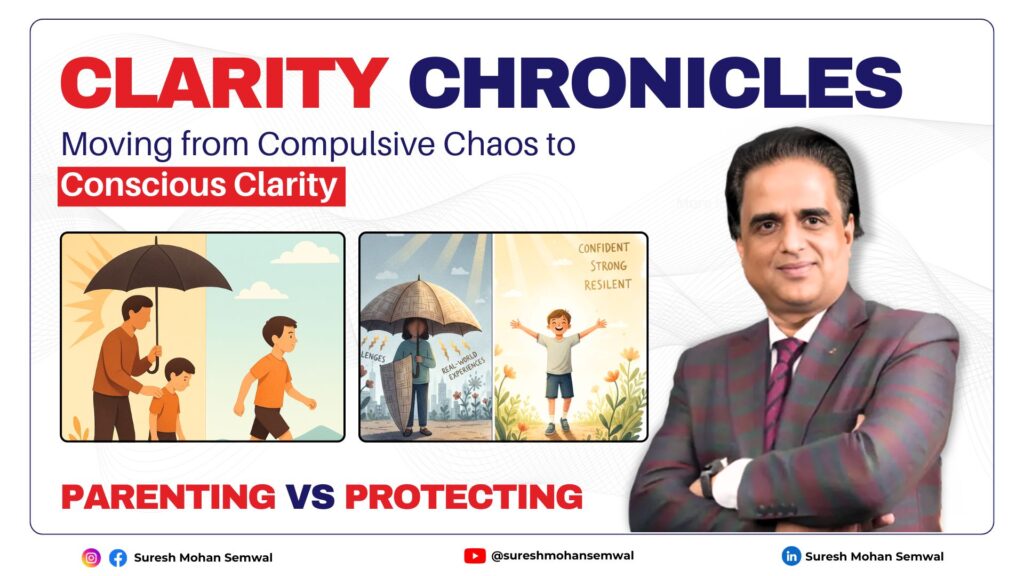
Understanding the Difference
Parenting is often misunderstood as protecting children from every possible difficulty. In today’s world, many parents genuinely believe that their primary responsibility is to shield their children from discomfort, failure, rejection, and struggle. The intention is loving and well-meaning, but the long-term impact of this approach is rarely examined.
Protection Does Not Create Strength
Children who need constant protection are usually not strong. Strength is multidimensional. Emotional strength matters. Physical strength matters. Character strength matters. Today, we increasingly see children with weak immune systems at a very young age. They fall sick frequently, struggle with digestion, and are more prone to allergies. We should worry about this. If we are loving parents, how are we allowing our children’s bodies to become weak?
Physical Strength Cannot Be Replaced by Love
Love is essential, but love is not a substitute for muscle strength, stamina, or a healthy immune system. Poor metabolism, often caused by excessive junk food intake, erratic routines, lack of physical activity, and convenience-driven choices, makes children vulnerable for life. Children do not create these patterns alone. We provide the food. We allow the habits. We set the routines. And weak bodies eventually lead to dependent lives.
Emotional Resilience Is Built, Not Provided
Along with physical strength, emotional resilience is non-negotiable. Life will give setbacks. Failures will happen. Heartbreaks, rejection, disappointments, and unfair situations are inevitable. Children must learn how to face these realities. The real skill is not avoiding pain but recovering from it. How do you bounce back after failure? How do you stand steady after rejection? How do you regulate emotions after heartbreak? How do you get back to work when things fall apart? These abilities can only be developed through experience, reflection, and guidance, not through constant shielding.
Preparing Them for the Real World
Our children will not live in isolation. They will work with others, negotiate differences, face competition, deal with pressure, handle authority, and manage conflicts. If we overprotect them at home, the outside world becomes overwhelming. Parenting must therefore focus on making children strong enough and wise enough to function in the real world, with people, systems, expectations, and consequences.
What Parenting Really Means
Parenting is not about cushioning every fall. Parenting is about building strength physically, emotionally, and ethically. Teaching discipline, etiquette, work ethics, and values is not done through instructions or lectures. It happens through daily behaviour. Children observe how we eat, how we manage health, how we handle failure, how we treat people, how we work, and how we respond under pressure. That is the real classroom of parenting. Do it every day. Live the values you want them to learn. Show them the right way of living.
A Truth Worth Sitting With
“Tragedy of good parenting: we are only successful if we can make ourselves irrelevant.”
Good parenting largely completes its role by the time a child is ready to stand independently. Bad parenting, however, continues to show its consequences throughout life.
Think About It
Are we raising children who are strong in body, resilient in mind, and grounded in values, or children who are merely comfortable and protected?
What setbacks, failures, or emotional experiences are we preventing today that our children must learn to handle tomorrow?
If our children had to work, compete, collaborate, and survive in the real world without our support, would they be strong and wise enough?